
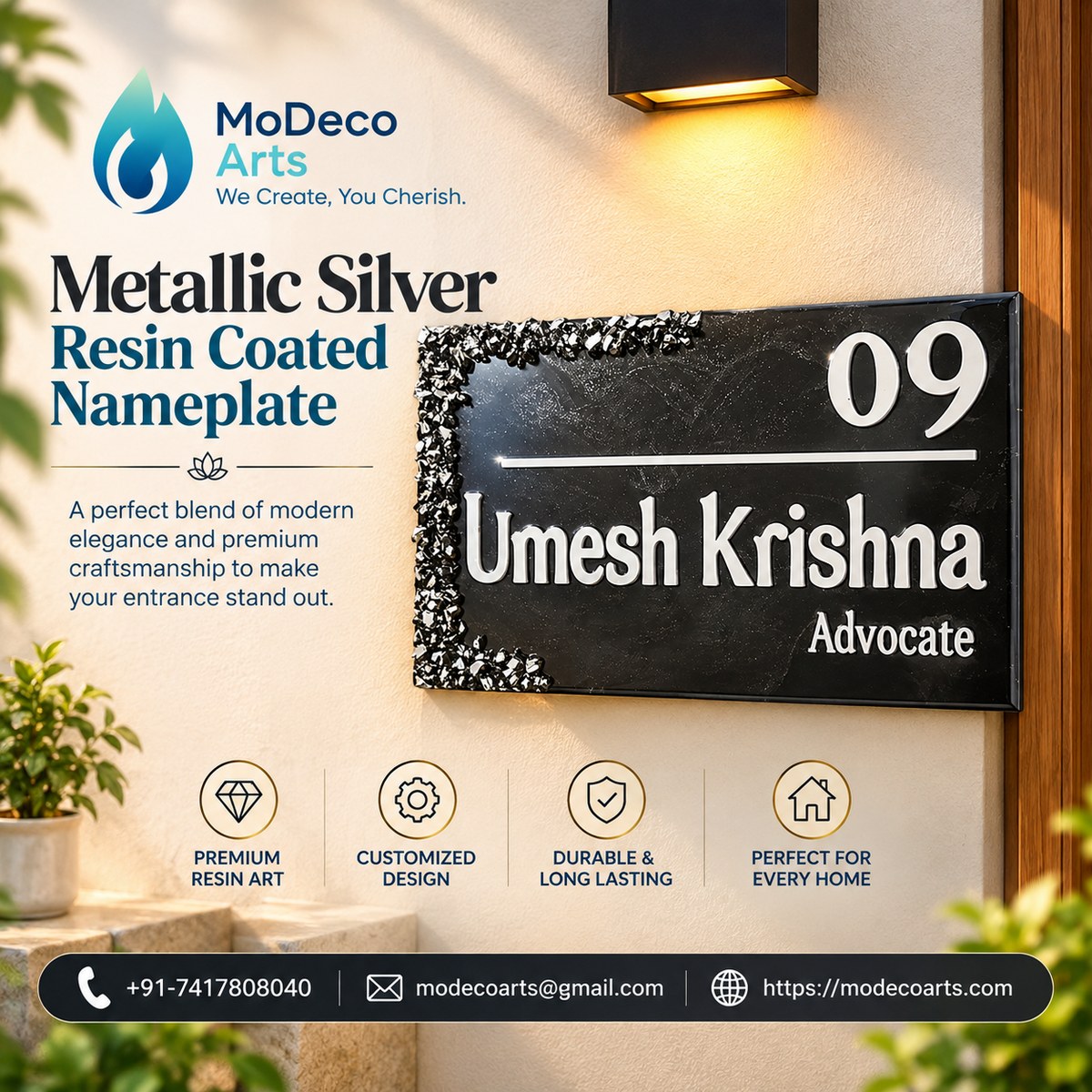
Resin Coated Nameplate – A home’s entrance is more than just a doorway. It is the first thing guests notice and a reflection of the people who live inside. From the colour of the walls to the lighting and decorative elements, every detail contributes to the overall appearance of a home. One such detail that can make a remarkable difference is a beautifully designed nameplate.
A metallic silver resin coated nameplate combines modern elegance, artistic detailing and personalised design to create an entrance that feels sophisticated and welcoming. With its rich black background, silver lettering, decorative textured border and glossy finish, this style offers an attractive choice for homeowners who want something distinctive rather than an ordinary nameplate. Explore resin nameplates from modecoarts.com
At MoDeco Arts, we believe that personalised décor should combine creativity, quality craftsmanship and individual expression. A thoughtfully designed resin nameplate does exactly that by transforming a functional house sign into a decorative feature that complements your home’s personality.
What Is a Metallic Silver Resin Coated Nameplate?
A metallic silver resin coated nameplate is a decorative sign that combines a resin-coated surface with metallic accents and personalised lettering. Depending on its construction, it may feature a dark base, reflective silver letters, textured decorative elements and a glossy finish that enhances its overall appearance.
Unlike a basic name board that focuses primarily on displaying a name or house number, a designer resin nameplate brings together material, colour, texture and typography to create a coordinated visual statement.
Understanding the Metallic Silver Finish
Metallic silver is a versatile finish that offers a contemporary alternative to traditional gold, brass and wooden nameplates. Its cool-toned appearance pairs particularly well with black, charcoal, white, grey and natural wood finishes.
When silver lettering is placed against a dark background, the contrast makes the name stand out clearly. The reflective appearance also creates an elegant effect when natural daylight or entrance lighting falls across the surface.
Why Silver Works So Well with Black
The combination of black and silver creates a balanced look that feels both modern and timeless.
- Strong contrast: Silver lettering remains visually prominent against a black background.
- Contemporary appearance: The colour combination complements modern architectural styles.
- Versatile styling: It pairs well with wooden doors, neutral walls and dark entrance fixtures.
- Refined detailing: Metallic accents add visual interest without requiring an overly colourful design.
The Role of Resin in Nameplate Design
Resin allows designers to explore different surface effects, decorative patterns and finishes. Depending on the materials and techniques used, resin-coated nameplates can feature glossy surfaces, layered visual effects, embedded decorative details and distinctive textures.
The resin coating can enhance the depth and appearance of the underlying design while creating a smooth, finished surface.
However, durability depends on the quality of the base, the resin system, the application process and the conditions in which the nameplate is installed. For outdoor installations, appropriate UV protection and weather-suitable materials are important considerations.
Why Choose a Metallic Silver Resin Nameplate for Your Home?
Choosing the right nameplate involves more than selecting a material. It is about finding a design that matches your home’s architecture, reflects your personal taste and remains easy to read.
A metallic silver resin nameplate offers several design advantages for homeowners seeking a premium entrance aesthetic.
1. A Premium and Contemporary Appearance
The combination of a dark background, silver lettering and decorative resin detailing creates a sophisticated visual effect.
This style works particularly well in modern apartments, independent houses, villas and contemporary residential buildings. It can complement both minimalist entrances and more elaborate exterior designs.
A well-proportioned nameplate can also make a simple entrance appear more thoughtfully designed without requiring extensive decorative changes.
2. Personalised Names and House Numbers
A nameplate should identify your home while reflecting your preferences. Customisation allows you to create a design that feels personal rather than mass-produced.
Depending on the available design options, you may choose to include:
- Your family name or individual names.
- A house, villa or apartment number.
- A professional title, where appropriate.
- A preferred font and lettering arrangement.
- Decorative borders or complementary design elements.
For example, a house number positioned prominently above the family name creates a clear visual hierarchy. Smaller supporting text can then be placed beneath the main name without making the design feel crowded.
3. Decorative Texture and Artistic Detailing
A plain rectangular board can look neat, but additional detailing can make a nameplate more distinctive.
Metallic silver resin designs may incorporate textured borders, layered finishes, contrasting surfaces or decorative accents. These details create depth and help the nameplate become a focal point near the main entrance.
The key is balance. A decorative border should complement the lettering rather than compete with it.
4. A Design That Complements Different Interiors and Exteriors
One advantage of a black-and-silver colour palette is its adaptability.
It can coordinate with:
- Dark wooden main doors.
- White and cream exterior walls.
- Grey stone or concrete finishes.
- Black metal gates and door hardware.
- Contemporary entrance lighting.
For a particularly cohesive appearance, consider matching the nameplate’s metallic accents with existing handles, wall lights or other entrance accessories.
5. A Functional Decorative Feature
A nameplate has a practical purpose: helping visitors, delivery personnel and guests identify the correct home.
A good design combines this function with attractive styling. Clearly displayed house numbers, legible lettering and suitable proportions make the nameplate useful as well as decorative.
For the best result, choose a design that remains readable from the usual viewing distance and under the lighting conditions around your entrance.
Key Design Elements of a Metallic Silver Resin Nameplate
The overall appearance of a designer nameplate depends on how its individual elements work together. Understanding these elements can help you select a style that suits your home.
Black Background with Silver Lettering
A black background gives the design a strong visual foundation, while metallic silver lettering creates contrast and prominence.
This pairing is particularly effective for displaying family names and house numbers. It also allows the surrounding decorative elements to remain visually balanced.
Raised or Three-Dimensional Lettering
Raised lettering can introduce depth and create a more prominent appearance than flat text.
When used thoughtfully, three-dimensional lettering helps distinguish the house number from the main name and supporting text. The exact effect depends on the lettering material, profile, placement and finish.
Choosing the Right Font
Font selection plays an important role in both appearance and readability.
- Classic serif fonts: Suitable for a traditional, formal or professional look.
- Modern sans-serif fonts: Ideal for clean, contemporary entrances.
- Elegant display fonts: Useful when the nameplate needs a more decorative personality.
For longer family names, avoid excessively elaborate fonts that make individual letters difficult to recognise.
Textured Metallic Borders
A textured silver-and-black border can add a handcrafted appearance and frame the main lettering.
For the most effective result, keep the decorative detailing concentrated around the edges and allow sufficient open space around the name and number.
This makes the design look intentional rather than overcrowded.
House Number Placement
The house number is often one of the first details visitors look for.
Positioning it prominently above the family name can improve visibility and create a natural reading order. The number should be large enough to distinguish easily without overpowering the rest of the design.
How to Choose the Right Resin Nameplate for Your Home
Before ordering a customised nameplate, consider your entrance dimensions, wall colour, installation location and preferred visual style.
Step 1: Measure the Available Space
Start by measuring the wall or door area where you intend to install the nameplate.
A wide rectangular design may suit a spacious entrance, while a compact apartment doorway may benefit from a smaller or vertically arranged design.
Leave enough surrounding space so that the nameplate does not appear cramped against the doorframe, wall lights or decorative fixtures.
Step 2: Match the Design to Your Entrance
Look at the existing colours and materials around your entrance.
For Modern Apartments
Choose clean typography, a black background and restrained metallic accents. This creates a sophisticated appearance without taking up too much visual space.
For Independent Houses and Villas
A larger rectangular nameplate with a prominent house number and decorative border can complement a spacious entrance.
For Homes with Wooden Doors
The contrast between natural wood and black-and-silver detailing can create a warm yet contemporary look.
Step 3: Select the Right Size and Lettering
The nameplate should accommodate the complete name without making the lettering too small.
If you have a long family name, ask for a layout that prioritises readability. A slightly wider plate or a carefully adjusted font size may produce a better result than squeezing the text into a smaller space.
Step 4: Consider Indoor or Outdoor Installation
The installation location affects material selection and maintenance requirements.
For a covered apartment corridor, exposure to rain and direct sunlight may be limited. An exposed entrance, however, may experience intense sunlight, moisture, dust and seasonal weather changes.
Before installing an outdoor nameplate, confirm that its construction, protective finish and mounting method are suitable for the conditions.
Step 5: Check the Mounting Method
The nameplate should be secured firmly to the intended surface.
Choose suitable mounting hardware for the wall material and the nameplate’s weight. If drilling is restricted in your apartment complex, check whether an alternative mounting method is supported by the product manufacturer.
Resin Nameplate vs Other Nameplate Materials
Different nameplate materials offer different visual effects and practical advantages. The best option depends on your design preferences, budget and installation environment.
Resin-Coated Nameplates
Resin-coated designs are well suited to decorative finishes, personalised layouts and layered visual effects.
Their appearance can range from simple and minimal to richly textured and artistic. The exact characteristics depend on the base material and resin application.
Acrylic Nameplates
Acrylic nameplates are popular for their clean appearance, lightweight construction and design flexibility.
They can feature transparent surfaces, mirrored finishes, layered lettering and modern geometric shapes. They are a useful option for homeowners who prefer a sleek, contemporary style.
Metal Nameplates
Metal nameplates offer a distinct industrial or premium appearance, depending on the metal and finish used.
Stainless steel, aluminium and brass can each produce different results. Their suitability for outdoor use depends on the specific material, coating and installation conditions.
Wooden Nameplates
Wood introduces warmth and natural texture to an entrance. It can work particularly well in traditional homes, rustic interiors and spaces featuring natural materials.
For exterior use, the wood species and protective finish should be selected according to the level of moisture and sunlight exposure.
How to Maintain Your Metallic Silver Resin Coated Nameplate
Proper maintenance helps preserve the appearance of your nameplate and allows you to identify potential installation or surface issues early.
Regular Cleaning
Use a soft, clean microfibre cloth to remove dust and light surface marks.
If necessary, follow the manufacturer’s cleaning instructions and use a mild cleaning solution that is compatible with the coating.
Cleaning Practices to Avoid
- Avoid abrasive scrubbers that may scratch the surface.
- Do not use harsh solvents or strong chemicals unless the manufacturer confirms they are suitable.
- Avoid excessive pressure on raised lettering or decorative elements.
- Do not use sharp tools to remove dirt from textured borders.
Protecting the Finish
Direct sunlight and changing weather conditions can affect some resin systems over time. UV exposure may cause certain coatings to lose their original appearance, while moisture can affect unsuitable base materials or poorly sealed edges.
For an outdoor installation, ask about UV resistance, weather suitability and recommended maintenance before purchasing.
Inspecting the Mounting Hardware
Periodically check that the nameplate remains securely attached to the wall or door.
If you notice movement, loose fasteners or signs of moisture around the mounting points, address the issue promptly using a suitable repair method.
Why Custom Nameplates Make Thoughtful Housewarming Gifts
A personalised nameplate can be a meaningful gift for someone moving into a new home.
Unlike generic decorative accessories, it can be customised with the family’s name, a house number or another detail that makes it specific to the recipient.
Suitable Occasions for Gifting
A customised resin nameplate can be considered for:
- Housewarming ceremonies.
- New apartment purchases.
- New home construction or renovation.
- Wedding gifts for couples setting up a home.
- Family celebrations and special occasions.
Making the Gift More Personal
When selecting a nameplate as a gift, consider the recipient’s home style and preferred colours.
A metallic silver and black design may suit someone who enjoys contemporary décor, while a wooden or floral design may be more appropriate for a home with a softer, traditional aesthetic.
Before placing an order, confirm the spelling, house number, preferred lettering and installation dimensions with the recipient whenever possible.
Metallic Silver Resin Nameplates by MoDeco Arts
At MoDeco Arts, our approach to personalised décor is centred on combining attractive design with individual expression.
A metallic silver resin-coated nameplate is an excellent example of how a functional household item can also contribute to the appearance of an entrance. Its dark background, silver lettering and decorative detailing offer a distinctive option for homeowners who appreciate contemporary design.
Designed Around Your Personal Style
A well-designed nameplate should complement your home rather than look disconnected from its surroundings.
When exploring a customised design, consider the lettering style, background colour, dimensions, decorative elements and intended installation location. These details help create a more coordinated result.
Bringing Together Design and Practicality
A premium-looking nameplate should not compromise on readability or installation suitability.
Clear lettering, balanced spacing, appropriate materials and a secure mounting method are all important parts of selecting the right design.
At MoDeco Arts, we believe that the most successful decorative pieces combine visual appeal with everyday usefulness.
Explore Personalised Nameplate Designs
If you are planning to refresh your entrance or searching for a personalised home décor gift, explore the options available through MoDeco Arts.
Choose a style that reflects your taste, complements your home’s architecture and gives your entrance a more personal identity.
Conclusion: Give Your Entrance a Distinctive Identity
A metallic silver resin-coated nameplate is more than a way to display a family name or house number. It is a small but meaningful design element that can make your entrance feel more polished, welcoming and personal.
From the contrast of silver lettering against a black background to the visual interest of textured borders and carefully arranged typography, every detail contributes to the final appearance.
When choosing a nameplate, consider its design, dimensions, readability, material quality, installation environment and maintenance requirements. These factors will help you select a piece that looks appropriate for your home and serves its purpose effectively.
Discover personalised nameplate designs with MoDeco Arts and give your home entrance a finish that reflects your style.
Visit modecoarts.com to explore more creative décor ideas and customised design options.
MoDeco Arts — We Create, You Cherish.


